Boulder Jewish News Arts, Culture, Events, Lifestyles, Holidays, Synagogues, Education

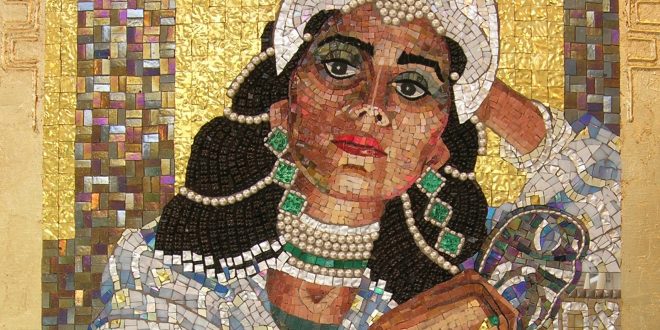
Those who know me, know I have a dual interest in Torah as well as in some aspects of pop culture. Therefore I couldn’t’t help noticing this year when Purim and Iran take such a public stage, that there are also two major events focusing on the life of Elvis Aaron Presley. No wonder when years ago I saw a feature film called ‘One Night with the King,’ I immediately thought it was about Elvis. You see, even before I knew much about the Book of Esther, and even before I knew of Elvis’s matrilineal lineage I used to sleep with a picture of Elvis under my pillow. Though I was already going to a Jewish day school, as an only child on Welfare, but my interests outside of school focused on the entertainment world, which in the fifties, was Elvis “the king”.
Let’s look at three resonant features between these otherwise very disparate figures.
One: ROYALTY: Later in my life, delving more deeply and seriously into biblical texts, I was intrigued about the mysterious persona of Queen Esther. Who was she? Who wasn’t she? Raised as an orphan with mysterious origin, she became a kind of cosmopolitan figure in the palace. In fact the sages say that each ambassador from various nations thought that she resembled someone from their nation since until the critical moment, she kept her identity a secret. One of the meanings of the Scroll of Esther is actually ‘Revealing of the Hidden!’
This is what Malchut, royalty, represents; it’s a distinct presence that due to some kind of charisma touches a chord in everyone encountered. How many could say the one entertainer of his time that expressed that kind of Malchut had to be Elvis- the one man called ‘king’ in his time. An ‘epic’ quote that conveys his royalty with a Jewish flavor: ‘There’s room at the top for everyone.’ His mother tried to keep her Jewish connections to a great -great Lithuanian grandmother a secret because it seems in Tupelo, there was lots of antisemitism and even his father was not so pro-Jewish. However, eventually he found out. In his later years, he got a hairdresser, Larry Geller, who deepened his interest in spirituality, and especially to books about Kabbalah. As is well known, as perhaps when he realized his life was fleeting, he wore a Jewish star and had one on his mother’s grave and even got a Chai necklace with 17 diamonds on it that he wore prominently during his last shows. Both Queen Esther and King Elvis seemed to blend different types of multi-cultural highlights and music from many traditions.
Two: SHABBOS. Now, many of you also know I spent a whole year pointing out connections between the holy day of Shabbos with each week’s Torah portion. So naturally I would pick up Shabbos aspects of both King Elvis and the Queen of Persia. More and more details about Elvis’s younger and teenage years in Memphis hanging out with a rabbi’s family are coming to light. As a child, he and his parents lived beneath a Rabbi and his family. They used to invite the boy upstairs sometimes to partake of a Shabbos lunch, where he did develop a liking for Jewish food, especially challah and carrot tzimmis! In fact, they often asked him to be their ‘Shabbos Goy,’ in other words a non-Jew who would help with forbidden activities like putting lights off and on. All this of course before they knew he was Jewish. He wouldn’t’ take any money for his ‘work’ and later at a public gathering pointed to a man in the crowd as ‘my rabbi!’
Since Esther was told not to discuss her background, she had to keep her Shabbos observance a secret too. The Megillah talks about her having ‘seven maidens’ who were chosen to serve her. She gave each a special name referring to something created on each day of the week. For six days the servants saw her working, but the seventh one always saw her resting. Thus for years, till the showdown with Haman, she was able to keep her beloved Sabbath even without any Jewish community around her. As the day that G-d rested from all of creation, where rest means imprinting divinity on the entire universe, so too did both Queen Esther and King Elvis, lift up their surroundings to higher planes of existence.
Three: CHESED-KINDNESS. Concern for people in need, perhaps from sad childhood experiences. Esther was an orphan from birth- her father died after her mother became pregnant and her mother passed in childbirth. Like her ancestor Rachel, the feeling of loss kept her heart open to people and their needs. Instead of flaunting her position, the Megillah writes, ‘she found favor in the eyes of all who saw her.’ Loneliness for her was a stimulus for reaching out to all humanity. As the Megillah says, ‘she became the queen over one hundred twenty seven kingdoms,’ not just by royal fiat but by personal inspiration. The sages tell us that once Rabbi Akiva was teaching some students who dozed off during the Roman turmoil- perhaps like some people in our times- and he woke them up by asking, ‘What gave Esther the privilege of ruling over 127 provinces? It was because of the matriarch Sarah who lived 127 years!’ Later commentaries explain: In spite of all the difficulties that Sarah had in her life, her years were filled with a sense of purpose, inspiration, and influence on everyone around her.
Elvis too, besides being born into an extremely poor family, had a twin brother, who, at least he was told, passed away in childbirth. Now this information is shrouded in mystery but during his life, Elvis deeply felt this loss, and often grieved over it in one way or another. Even his later success and wealth didn’t’ really mitigate this feeling. Other people may become hardened by such experiences he seemed to follow the Jewish mandate, ‘Love the stranger, for you were strangers in a strange land.’ There are stories after stories, where he would stop in the middle of nowhere- perhaps seeing a child on the street (especially if the child were trying to play a musical instrument) and offer them encouragement and assistance. This help often went beyond a one-time aid, even in his later years, before his untimely death at the age of forty two. Though he had so many challenges of his own, he would wander the streets in the middle of the night looking for people and families to help. Once, to the dismay of others, especially his promotional, money focused boss, Colonel Tom Parker, he came across a homeless family of four sleeping in their car. Though it was around 2a.m. he immediately called his lawyer and purchased a house for them and kept tabs on them afterwards. The immortal line from Leonard Cohen captures both the inner nature of Queen Esther and King Elvis: ‘There’s a crack in everything; that’s how the light gets in.’
May the light of these two unique Jewish personalities bring us closer to the fulfillment of the verse that we shout out both in the Megillah and at the closing of Shabbos: ‘THE JEWS HAD LIGHT, HAPPINESS, REJOICING AND HONOR’- So may it be speedily in our days for all our people and the entire world, with the coming of Mashiach!