Boulder Jewish News Arts, Culture, Events, Lifestyles, Holidays, Synagogues, Education


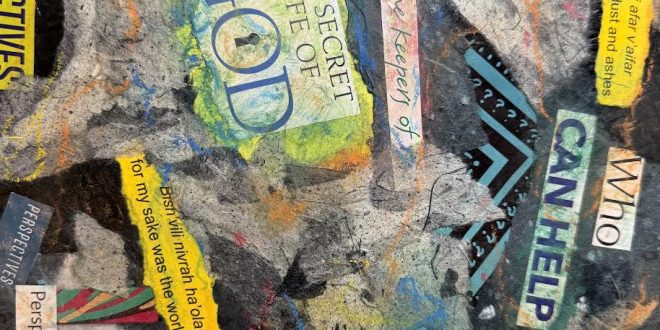
On not-knowing, bearing witness, and the Jewish heart of a Zen practice
By Rabbi Eva Sax-Bolder
“The place where you stand is holy ground.” — Exodus 3:5
Summer, 2026. Each November for the past three years, I make my way back to Poland as the rabbi-in-residence at the annual Zen Peacemakers Bearing Witness Retreat at Auschwitz-Birkenau. Together with people from around the world, Mozambique to Finland, Prague to Seattle, Jewish descendants of the Shoah, Buddhists, Christians, people of no tradition at all, children and grandchildren of German perpetrators, we gather on that ground and simply walk and sit as we connect with this place. We do not debate history. We do not explain or fix. We bear witness.
People ask me, quizzically and sometimes with consternation in their eyes: Why do you keep going back? It is a fair question and one I do not fully understand myself. I was born into a family with a mother and grandparents who survived while other family members perished in this camp. My mother and her parents were the fortunate ones who walked out of Birkenau. That ground holds my blood, my name, my history. And yet I return not only to mourn. . . I return to practice.
The Bearing Witness retreat is grounded in the three tenets articulated by Roshi Bernie Glassman, the Brooklyn-born Zen teacher and social activist who founded the Zen Peacemakers Order in 1996. Their guiding principles are: not-knowing, bearing witness, and loving action. These tenets move in sequence, but they are not truly separate ~ each one flows into and holds the others.
Not-knowing means arriving without fixed ideas, without the armor of certainty. Bernie used to say it is like entering as a child, with every bone, every cell, every hair of your body open to what is actually there. At Auschwitz, this means resisting the temptation to already know what one may feel, to make meaning, and to shape words to attach to the experience. It means letting the place land on you before you begin to interpret it or as we like to say, “we are there to listen to the soil.”
From that open ground, bearing witness becomes possible. Not testimony, not performance, but a dissolving of the distance between the one who looks and what is looked at. When I sit on the frozen ground at Birkenau, reading and hearing names spoken aloud, I am not observing history. I am, for a moment, inside it. The crumbling barracks, the rusted wire, the absence that hums through every inch of this place. . . I let it enter me. I do not protect myself from it.
And from bearing witness, loving action arises ~ not planned or prescribed, but emerging naturally from genuine presence. Sometimes it is tears. Sometimes it is kaddish. Sometimes it is a conversation with a German participant whose relatives were Nazis that neither of us could have scripted. The action is not something we bring to the retreat. It is something the retreat gives birth to.
As a daughter of survivors, I grew up with a grief that had no edges. It was not spoken of directly; it lived in my mother’s silences, in what was not said at the dinner table, in the stories that stopped abruptly before the hardest parts could be revealed. This is the nature of intergenerational trauma. It does not end with the generation that endured it. It migrates. It settles in the bodies of children who were never there. When I first stood at Auschwitz-Birkenau as an adult, I felt something I had not expected: recognition. Not of a place I had visited, but of a place I had somehow already been carrying. The retreat has taught me that this inheritance is not only a wound, it is also a form of memory that the body shields on behalf of those who could not speak. Going back is a way of honoring what my mother and her parents survived. It is a way of saying: I have not looked away.
The Hebrew word teshuvah is usually translated as repentance, but its root is simply shuv ~ to return. It is the same root in hashivenu: return us. Return us to You Oh Mystery, return us to ourselves, return us to what we know to be true. Teshuvah is not about punishment. It is about the courage to turn back toward what matters and aligning with my truth~ the truth that is contained in all parts of me.
Each time I return to Auschwitz, I am doing teshuvah in the most literal sense. I am turning back toward the ground of my mother’s and grandparents’ survival. I am practicing the not-knowing that Bernie taught, arriving without answers, open to whatever arises. And I am bearing witness in the deepest Jewish sense of the word: eid, witness, the one who was present and does not forget.
Friends and members in my community wonder about a rabbi sitting at a Zen retreat. I understand the question. But what I have found, year after year, is that this practice has deepened my Judaism rather than displaced it. Sitting in silence on that frozen ground, chanting Kaddish with Christians and Buddhists and people who have never entered a synagogue — I have felt the full force of our obligation to memory, to witness, to zachor~ to remember.
Bernie himself was a Jewish boy from Brooklyn. The three tenets he gave the world were not separate from his heritage. They were, I believe, another expression of who he was and what he came into the world to be. Not-knowing is the beginning of awe. Bearing witness is the work of every Jew who reads names aloud on Yom HaShoah. And loving action? Is this not tikkun olam? The Zen frame gave me new language for something Judaism has always asked of us.
That is why I return. Not only for my mother, or my grandparents, or the six million. I return because this practice: arriving open-minded and open-hearted and staying present allows action to arise from love as a form of prayer. The ground of that place still speaks. And because, as long as I am able, I want to be someone who listens as a way to remember. To remember is not sentiment. It is mitzvah, obligation, the act by which we as a people remain a people across time and exile.
The rabbis taught: B’chol dor vador chayav adam lirot et atzmo k’ilu hu yatza miMitzrayim: in every generation, each person is obligated to see themselves as if they personally left Egypt. Memory, in Judaism, is never merely historical. It is always present tense. It is always I, not they.
The Yizkor prayer asks of us: May our memories of the departed be both tender and true, undiminished by time, not falsified by sentimentality. Let us recall them and love them as they were. This is zachor. This is why I return to the holy ground of Auschwitz-Birkenau. Not to dwell in the past, but to carry it forward, alive and insisting, into everything I do. I carry my mother’s and grandparent’s survival, and the memory of all those who did not survive, into how I aspire to live. That is the only return that matters.
Rabbi Eva Sax-Bolder is a spiritual leader and artist, designing transformative learning, lifecycle and ritual opportunities to provide seekers with joyful and creative approaches to Judaism. R’ Eva retired as the Rabbi of The Shul of NY and most recently, as ‘Rosh Hashpa’ah, head of Spiritual Direction for the ALEPH Ordination Program, supporting the spiritual development of the seminary students and faculty. She is honored to return for the fourth year as the rabbi-in-residence at the Zen Peacemakers Bearing Witness Retreat in Auschwitz-Birkenau. An alumna of CLAL’s trans-denominational Rabbis Without Borders and the IJS Clergy Leadership Program, she is also a teacher of Jewish Mindfulness Meditation, Mussar, Wise Eldering and the Jewish Studio Process, integrating the expressive arts into her rabbinate. R’ Eva maintains a private practice as a mashpiah, a Jewish spiritual director.