Boulder Jewish News Arts, Culture, Events, Lifestyles, Holidays, Synagogues, Education


Daniel “Dany” Rejzner is the CEO of Day8, a Boulder foodtech company that is working on a big, surprisingly practical idea: What if the most scalable source of high-quality protein is already sitting in our agricultural system – but we’ve been throwing it away?
1. What’s your story, Dany, and how did you decide to make Boulder home?
I have a background in physics and a career in tech, with extensive experience in entrepreneurship and selling to food brands. I have founded three companies in the food space, with my previous ventures focusing on sales and marketing solutions for food brands.
My last company developed a platform for launching food brands at retail, achieving profitability, sales in 15 global markets, and major clients such as Kroger, P&G, and Nielsen.
Through this work, I gained deep insights into the challenges of plant-based product launches and recognized the urgent need for better ingredients—leading me to found Day 8 to solve this problem.
After two-and-a-half years of developing the technology to unlock the most abundant protein on the planet, Day 8 is getting ready to launch on the US market. My decision to move to the US helps me be close to the market, clients, investors, and strategic partners. Since moving in August, I have already identified a large production partner and generated traction from the leading companies in the space.
Boulder is where natural food started so it’s only natural that Day 8 would be based in Boulder CO 🙂
2. So, what’s the story behind Day8?
Day 8 was founded by a team of serial entrepreneurs to tackle humanity’s most urgent challenge: sustainable nutrition. While protein remains the fundamental building block of our health, the world is currently facing an unprecedented “Protein Crunch” driven by the largest expansion of the consumer base in history. According to BCG, a billion new people are entering the active category, with half a billion new consumers starting to regularly use sports nutrition products in 2025 alone. This shift is fueled by a global fitness revolution where one in four Americans now works out regularly, a trend growing by 5% annually in North America and a staggering 10% in developing markets. Because the average person requires roughly 80 grams of protein daily, it has become a necessary component of every meal, leading 56% of active consumers to use sports nutrition products and 63% of gym-goers to consider protein powder a daily staple.
However, the $50 billion sports nutrition market is hitting a critical supply-side wall because high-quality protein has traditionally been sourced from animals. Animal production simply cannot scale to meet the projected 70% increase in required food production over the next 25 years, especially since 75% of all agricultural land is already occupied by livestock. This supply-demand gap has triggered an economic crisis for manufacturers, with the USDA reporting that whey prices surged 76% between 2023 and 2025. Industry leaders have already reported that this unprecedented level of input cost inflation has directly hit EBITDA and overall performance, signaling that animal-based proteins are becoming economically unviable. This crunch is further exacerbated by the rise of GLP-1 medications and new federal dietary guidelines, which have forced a radical redesign of food products away from sugar and toward extreme nutrient density, leaving manufacturers searching for a cost-effective, abundant, and functional protein foundation.
The solution to this global crisis lies in a radical new approach to our existing resources: upcycling agricultural waste. In most modern crop production, over 50% of the plant material consists of unused leaves that are currently discarded. Upcycling this massive stream of agricultural biomass is the only way to achieve a truly cost-effective and scalable global solution without requiring additional land or water. This model not only addresses the protein gap but also fundamentally benefits farmers by introducing a new business model. By valorizing what was once considered waste, farmers can unlock a second revenue stream from the same harvest, increasing their profitability per acre and rewarding them for total crop utilization. This creates a circular, sustainable food system that produces significantly more nutrition from the land we already cultivate.
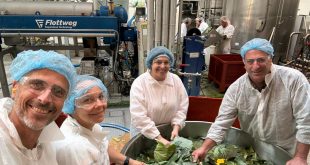
Our name, Day 8, signifies a new chapter for humanity; following the seven days of creation, it is now the “eighth day,” a time for us to take stewardship of the planet and build a sustainable foundation for the future. To achieve this, we have unlocked the “Holy Grail” of nutrition: RuBisCO. Found in every green leaf of the agricultural crops we already grow, RuBisCO is the most abundant protein on Earth, yet it has remained inaccessible for decades due to the complexities of extraction. After two-and-a-half years of intensive R&D, Day 8 has developed the technology to produce RuBisCO at scale. It is the only plant protein that offers a full amino acid profile superior to other plant sources, a neutral taste profile that is completely non-allergenic, and the high solubility required for the booming ready-to-drink market. Most importantly, it possesses the unique functionality to replicate the binding and texture of egg and dairy. Day 8 isn’t just offering an alternative; we are providing the high-quality, upcycled, and cost-efficient protein foundation the global food industry urgently needs to feed a changing world.
3. How is GLP-1 is disrupting sugar markets and how is pharma innovation forcing a structural redesign of food & supplement itself?
By biologically altering the brain’s “food noise,” these drugs are effectively shorting the sugar and ultra-processed food markets. Users frequently report a physical aversion to sweetness, describing high-sugar foods as sickeningly sweet or metallic. This biological “sugar tax” has already led to a documented drop in household spending on sugary beverages and snacks by nearly 11%. As nearly 35% of all food units are projected to be sold to GLP-1 households by 2030, the industry’s historical reliance on “craveability” through sugar, salt, and fat is facing a permanent collapse.
However, GLP-1s are landing on a consumer base that has already been shifting toward sugar reduction for years. This long-term evolution toward metabolic health and longevity has moved the “bliss point”—the perfect ratio of sugar and fat—from a marketing goal to a biological trap in the eyes of the modern consumer. People are no longer just looking for “low-fat” options; they are seeking total nutrient density. Because GLP-1 users consume significantly fewer calories, every bite they take must work harder to provide essential nutrition. This has created a “Nutrient-First” architecture where the goal of food production has shifted from high-volume satiation to high-density muscle preservation and satiety.
This biological shift is now being codified by the most aggressive federal mandates in U.S. history. The 2025–2030 Dietary Guidelines for Americans have officially declared war on added sugar, recommending a strict limit of just 10 grams per meal. Simultaneously, the FDA is finalizing Front-of-Package labeling that will force manufacturers to prominently flag high sugar levels by mid-2026. These regulations, combined with a federal push to increase protein intake to combat the chronic disease emergency, are forcing a structural redesign of the entire food and supplement industry. Manufacturers are being squeezed between new laws and a consumer who literally cannot stomach their old, sugar-heavy formulations
4. How do you see Israeli foodtech leading the global longevity and functional nutrition movement & what are your plans are for the GoforIsrael conference in Miami?
Israel has established itself as a global powerhouse in the longevity and functional nutrition sectors, boasting an ecosystem of over 250 foodtech startups. The country is currently ranked second globally in alternative protein investments, trailing only the United States, which reflects its highly developed scientific foundation and a unique “Deep Tech” approach to food.
The upcoming GoforIsrael conference in Miami on March 16, 2026 October 26, 2026, marks the first time this prestigious platform is being held in the United States, providing a strategic bridge between Israeli innovation and the American market. We would be happy to give U.S. individuals and entities an opportunity to join our journey as we scale these solutions to meet the global demand for sustainable, high-performance nutrition.