Boulder Jewish News Arts, Culture, Events, Lifestyles, Holidays, Synagogues, Education

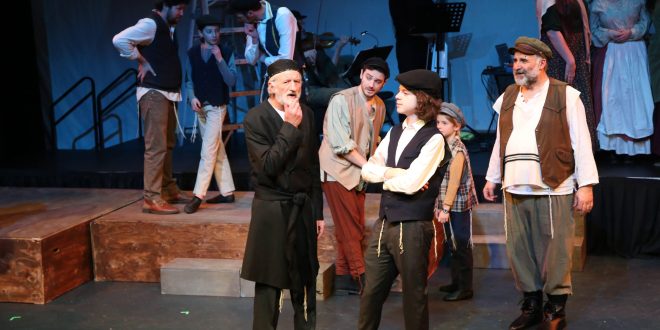
Rob Schware recently played the role of the Rabbi in Boulder’s sold-out production of Fiddler on the Roof. You could imagine after the 10 performances, and the three months of rehearsals, growing out his beard to look the part, and building up his confidence to perform in his first play at the age of 74, Rob would be ready for a break. But actually, the morning after Fiddler closed, Rob took off his yarmulke — the only part of his costume that was authentic, and a family heirloom given to Rob by a friend — and quickly changed hats to become another kind of teacher.
Rob and I are co-leading a three-week program at the Boulder JCC as part of the Exchange program entitled “Whole Brain Living and Aging,” and our first session was the day after Rob finished Fiddler. Yet the acting experience was still fresh, and meaningful for Rob, and even related to the Whole Brain Living approach to living. So what is Whole Brain Living? And how is it connected to Fiddler on the Roof? Let me explain. Created by neuroscientist Dr. Jill Bolte Taylor, Whole Brain Living provides practical strategies for emotional regulation, decision-making and conscious living through identifying and working with the “4 Characters” in our brains. Four Characters? According to Dr. Bolte Taylor, we all have them, and getting to know each of them, and when they each show up in our lives can change the way we not only think, but how we behave as well.
In a nutshell, let me introduce you to your the 4 Characters:
Character 1 is the part of us that is organized, keeps schedules, has command of language, is a critical thinker that makes judgements about right or wrong and basically gets things done.
Character 2 alerts us to danger, remembers past hurts, feels shame and fear, is stuck in old stories and worries about the future.
Character 3 experiences joy, playfulness, curiously, hopefulness and embodied sensations and pleasure.
Charcter 4 sees connections and feels the oneness of all things, is accepting, peaceful, spiritual and connected to all that is.
So again you ask, how does performing in Fiddler on the Roof, and the four Characters of Whole Brain Living relate. Below is the answer to that question, in the words of “Reb Rob:”
How did each of your four characters experience participating in Fiddler?
Character 1: This character was the stage manager. It memorized lines and songs, tracked blocking, and managed the rehearsal schedule
Character 2: This one felt the weight of responsibility—both to the community watching and to getting it “right.” It worried: “What if I’m not Rabbi enough? What if I dishonor this tradition?” The challenge was managing performance anxiety and the fear of letting people down.
Character 3: Oh, pure joy! This character loved the music, the community of cast members, the laughter during rehearsals. It connected emotionally to the Rabbi’s seven blessings of the young couple getting married, felt the heartbreak of exile. It sometimes overwhelmed me with emotion during tender scenes, lots of tears.
Character 4: This character said “Yes!” to the audition before the other characters could object. It saw possibility, loved trying something completely new at age 74, and trusted our director, Sarah Nowak.
Which character dominated the decision to participate, and who holds the microphone now?
My Character 4 absolutely dominated. When Rabbi Marc Soloway asked me to audition my Character 2 immediately said “You’re not qualified—you’ve never done musical theater!” My Character 1 said “Do you have time for this?” But Character 4 just trusted this would be an adventure and triumphed: “When else will you get to do Fiddler?” it said.
Interestingly, Character 3 is now mostly holding the microphone. In retrospect, what matters most isn’t about getting lines and timing down pat. What matters is the connection—to the cast who became friends, to audience members who said the play moved them to tears, to my own Jewish heritage. Character 3 is savoring the warmth of it all.
Did you learn anything about yourself or your characters in the role of Rabbi?
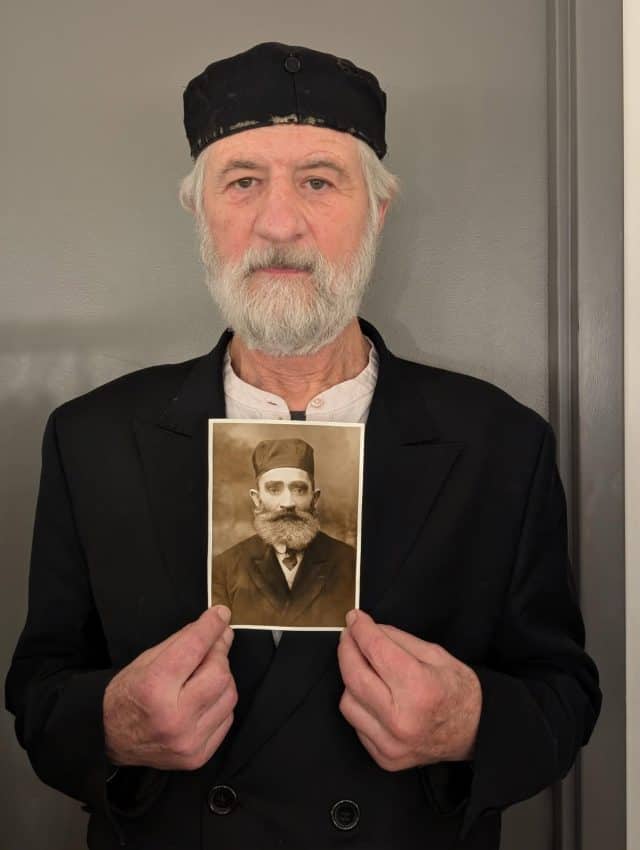
The Rabbi is essentially a community bridge—offering blessings, guidance (very little…”I think we should sit down”!), and stability amid chaos. What surprised me was discovering that Character 1, my analytical brain, actually struggled most with this role. The Rabbi doesn’t operate from logic trees—he operates from embodied tradition and relational wisdom.
I also learned that my Character 2—my anxious, approval-seeking self—has been carrying a lifelong question: “Am I Jewish enough?” Playing a Rabbi forced me to confront that. By the end, Character 2 had softened. It realized that being enough isn’t about external validation.
Did this experience inform how you are aging?
Absolutely. There’s a moment in the show when the Rabbi blesses Tzeitel and Motel during their wedding, and you see him as both elder and participant in the ongoing stream of life. He’s not done—he’s still essential, still offering something only he can offer.
Character 4 showed me that 74 isn’t too late for “first times.”
Like the rest of the villagers in Anatevka, the Rabbi also faces displacement—literally losing his home and community. Character 2 was terrified by this. But Character 3 found something profound: your identity isn’t just your location or your established routines. You carry something portable—relationships, faith, resilience. That’s changed how I think about the uncertainties of aging. I’m less afraid of what I might lose because I’m more aware of what remains.
Whole Brain Living was an essential tool in my tool kit when I climbed Mount Kilimanjaro four years ago. But here’s the difference: summiting Mt. Kilimanjaro was about individual endurance—me and the mountain. Fiddler was about ensemble—me and forty+ other people creating something larger than ourselves.