Boulder Jewish News Arts, Culture, Events, Lifestyles, Holidays, Synagogues, Education

By Adam Eisenberg
Antisemitism and overall anti-Jewish sentiment is ramping up in Boulder, congressional nominee Melat Kiros refused to call last year’s Pearl Street attack antisemitic. CU Boulder’s Students for Justice in Palestine (SJP) chapter bizarrely advocated for the release of the attacker, before deleting the post, and then quietly reuploading it. And people seem reluctant to speak out against this due to the actions, whether perceived or actual, of Israel. How do I deal with all of this? By looking to a certain friend from Metropolis.
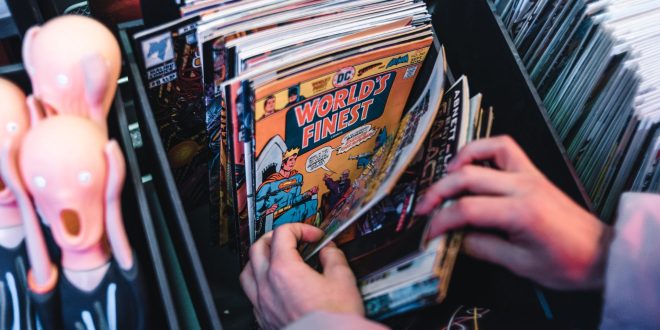
By now everyone knows who Superman is: The Man of Steel, Last Son of Krypton, Kal-El, Clark Kent, or any other name that I forgot to list. But how many people know how we can be Superman? I don’t mean putting on a flashy costume and trying to stop a train with your bare hands; I mean embodying the ideas that Superman is meant to portray. As crazy as it sounds Superman might be the key to understanding one’s Jewish identity during uncertain times.
One thing I want to be clear about is that I do not think everyone should subscribe to this opinion, nor is this opinion piece going to be for everyone; this is simply how I, a secular, October 8th Jew, with no super powers to speak of, makes sense of both my identity and a world where being a Jew is becoming increasingly unsafe. I do not pretend to speak for the entire diaspora with this piece and apologize to anyone who does not agree with it. But I also invite you to challenge it and I welcome conversation.
In the 1920s two Jewish boys from the Ohio, Jerry Siegel and Joe Shuster, created a character based of the idea of what they thought the ideal Jewish man should be: someone powerful, just and compassionate, but his greatest strengths and what is core to his Jewish identity is his resilience and wisdom. Many stories involved him solving problems with his brain instead of his fists, and one of the earliest adaptations of Superman, “The Adventures of Superman” radio serial had a segment where Superman takes on “The Klan of the Firey Cross,” and caused real life Klan membership to drop by 100,000 people.
The character’s history and villains would change over the years but his personality and the core Jewishness of him would stay relatively untouched over 100 years, thousands of comic books, and a truly awful 2016 movie with Ben Affleck as Batman. But what makes Superman, “Superman,” has remained the same over the years, and since October 7th I have applied these strengths to my own life.
In one scene in James Gunn’s “Superman,” he is being shouted at by an angry and terrified crowd. People throw things at him, and scream slurs at him. I do not have unbreakable skin, nor will I survive mob violence, but when a certain group on my campus is constantly trying to provoke a response, what I can do is the same thing the Man of Steel does throughout the film; keep a cool head and remain reasonable. I’m not saying to make peace with enemies, especially when they are spewing the most heinous vitriol imaginable, but with everyone giving into anger, self-control is not just a virtue but a necessity. Superman in most interpretations could give into anger and tear his enemies apart, but this would just confirm every single negative thing everyone already thinks about him.
In the “Justice League Unlimited” episode, “Clash.” Superman and Shazam debate throughout the episode about political ideologies, more specifically, whether Lex Luthor has turned over a new leaf, which culminates in a physical fight between the two where Superman loses control and wrecks a part of Metropolis. Although Superman’s suspicions turn out be well-founded, the episode is also not afraid to show everyone what losing control and giving into anger truly looks like, and the Blue Boy Scout is shown to truly regret his actions. But the biggest impact is that Luthor uses the incident in his favor and fuels his presidential campaign with it.
While masked “activists” are patrolling on my campus, and making ridiculous demands of both the university, and everyone attending, it would be so easy to let my anger take control, but in the end the only person it would hurt is myself. I will not sink to their level. People who embrace fear are cowards when faced with those who do not bow to their demands.
“Yeah,” you might say but “people are going to be bigots either way.” That’s true and there’s always going to be hatred for the “different.” And they more than likely are never going to admit that they have bigotries. What this calls to mind is how in Justice League Unlimited, Lex Luthor carries around a hunk of Kryptonite in his pocket for over two years and predictably develops cancer from it. Upon hearing his diagnoses, the first thing he does is blame Superman.
Here’s the thing though, the Lex Luthors of the world can think any awful thing about they want about me, and nothing will ever convince them otherwise, but I’ll never give them the satisfaction of being right about me either. Superman never made Luthor carry that rock, that was all him.
What I learned from Superman is that when the world is filled with hatred, the most important thing you can do is continue to be honorable and just. This sounds obvious, and it’s not always easy in a world shouting at you because you are an “other.” Especially when they’re constantly painting you as the problem for calling out their bigotry, but I will not use that as an excuse to become a problem.
In almost all his interpretations Superman remains honorable and kind. In “Superman Red Son” where he is raised in Soviet Russia instead of the US, Superman stops a building from falling onto Americans and returns a child’s balloon in the process. In “All Star Superman,” despite slowly losing his powers and dying, Superman stops a young girl from taking her own life and reassures her that she is stronger than she thinks she is. And one of his greatest moments is when Superman sees sick children in a hospital and gives them a special visit where he introduces them to the rest of the Justice League.
I don’t do this because it makes me feel better or because I want to virtue signal, but because it’s what my father and his father, and a certain Kryptonian taught me how a Jewish man should act, bravely and selflessly. Which is why I will continue to treat everyone with respect and empathy, even when they are screaming their slogans of hate in my face. I realize that this sounds holier than thou, and that’s not the point I’m trying to make. What I want people to take from this is that it’s better to keep your identity and compassion intact when the bigots are trying to tear those things down or paint your positive actions, no matter how minor, as some form of “hasbara.” Let their bullets of hatred bounce off your impenetrable skin.
But the greatest thing I learned from Clark Kent is the one that seems most impossible in these times: talk to people about your hopes and fears. The best scene in James Gunn’s “Superman” isn’t the one where he’s smashing Lex Luthor’s legion of mechanized soldiers, but the one where he visits his home in Smallville, Kansas, to be with his parents. Then in most interpretations, Superman makes sure his best friend, Bruce Wayne – The Batman – keeps him honest and fair. So, to those of you who are afraid, like me, all I can offer is the advice to just talk about it. It sounds silly, but like with a lot of things concerning Superman, it helps despite how it sounds.
Superman holds onto hope that no matter how dark things get there will always be someone to listen, and I believe in that too. You don’t have to talk to them for long, and it can be scary, but I can almost guarantee that there will be someone, somewhere, either here, there, or somewhere else entirely that will be willing to listen.
Reach out to your Ma and Pa Kent. Your best friend, like Batman. Your partner, your Lois Lane. Someone else in your circle, like Supergirl. People you’ve never met before, but who have shared fears and hope, like Wonder Woman or Shazam. Things won’t get better if we don’t let ourselves live under that yellow sun. And to those of you who think I’m living in a dream, I want you to hear a quote from the man himself, “Dreams save us, dreams lift us up and transform us into something better. And on my soul, I swear that until my dream of a world where dignity, honor, and justice are the reality we all share, I’ll never stop fighting. Ever.”