Boulder Jewish News Arts, Culture, Events, Lifestyles, Holidays, Synagogues, Education


April 17, 2026
Today is the 15th day of the Omer, making 2 weeks and 1 day and is Hesed of Tiferet. The quality of Tiferet is a balancing force between two extremes, often translated as beauty or compassion. Hesed is love without boundaries, and Gevurah is, sometimes, boundaries without love, while Tiferet is the central pole that allows synthesis and harmony and nuance.
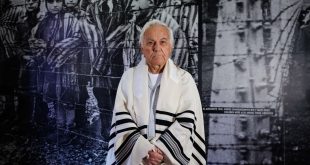
The days of the Omer can be a deeply personal, internal journey, but they also include 20th-century celebrations and commemorations that have become embedded in our national and collective story too. At the beginning of the week, we marked Yom HaShoah, Holocaust Memorial Day; this coming Tuesday is Yom HaZikkaron, Israel’s Memorial Day remembering the fallen in Israel’s wars and acts of terrorism; on Tuesday night, the mood shifts from mourning to celebration as we bring in Yom Ha’atzma’ut, Israeli Independence Day. These days are far from easy, and the Jewish world has become increasingly divided on positions and opinions on Israel, easily taking up extreme positions. The invitation of the week of Tiferet is to allow the forces of moderation in the middle to hold the tension of the often very vocal voices in opposing camps. It is not easy!
Some of you heard that just the day after Yom HaShoah, Finchley Reform Synagogue, the North London community where my mother, sister, uncles, aunts, and cousins are all active members, suffered an attempted arson attack. It’s so horrific and has shaken my family. This was just a few weeks after 3 masked men set fire to four “Jewish” ambulances just a few miles away, blowing them up. Two weeks earlier, one of those ambulances took my mother to the hospital after she fell and broke her hip. And now her shul has survived an attack. It all feels so close, and the rise in global antisemitism is very alarming and makes us all afraid. So much of this has come from the perpetuation of awful misinformation and demonizing of Israel. We know that the evil forces of antisemitism show up as a “three-headed monster,” as Bari Weis puts it; from the far right, from the far left, and from fundamentalist Islam. We see all three of these ugly heads. We move from honoring the memory of the victims of the Shoah to the memory and celebration of Israel in these tiferet days.
I restate my position that I am an unashamedly Zionist rabbi in a Zionist synagogue within a Zionist movement, and I will be mourning the losses with Israelis in our community on Monday night at the JCC, and celebrating Israel’s 78th birthday on Tuesday night. I recognize that we have very different opinions in our community and that we need to be able to hear each other. I do not believe that loving Israel as I do means that I cannot express deep criticism of some of what is happening there. Before Pesach, I wrote a piece for which some were very grateful and appreciative, and others were very angry. I do not want to rehash the specific issues over which I expressed concern, but I do very much acknowledge the feedback that I did not put these issues in their full context, and that some read my message as unfairly harsh criticism. Hopefully, we can debate some of this in other ways and forums, and whatever our different opinions are, that many of us come together to celebrate Israel, especially in the wake of October 7th, 2023, and the war with Iran. Many of us have loved ones who spent Passover in shelters and safe rooms, and there have been many casualties from the barrage of Iranian missiles. Of course, we dream of ultimate peace and for the safety of all in the region, knowing that the world desperately needs a new regime in Iran.
I am grateful for the honest feedback on both sides and deeply respect the differences among us. There is no doubt in my mind that so much of the hatred coming our way emerges out of sickening campaigns of misinformation and stunning ignorance of history. And we also need to have the humility and presence to be able to look inside and be honest about how our beloved Israel has fallen short, even in these existentially desperate times.
However strongly we hold our views, I believe the invitation of tiferet is to have enough humility to accept that others’ truths, even if opposite to our own, may also be truths. Of course, we need to stand with pride when we are threatened, pride in our traditions, our practices, our calendar, our sacred homeland. And we also need to be able to hold the beauty of the balance of tiferet and to hear those other voices in the hope that they can hear us.
I hope to see some of you at the events for Yom HaZikkaron at the Boulder JCC and Yom Ha’atzma’ut at Bonai Shalom.
Shabbat Shalom & Am Yisrael Chai!